

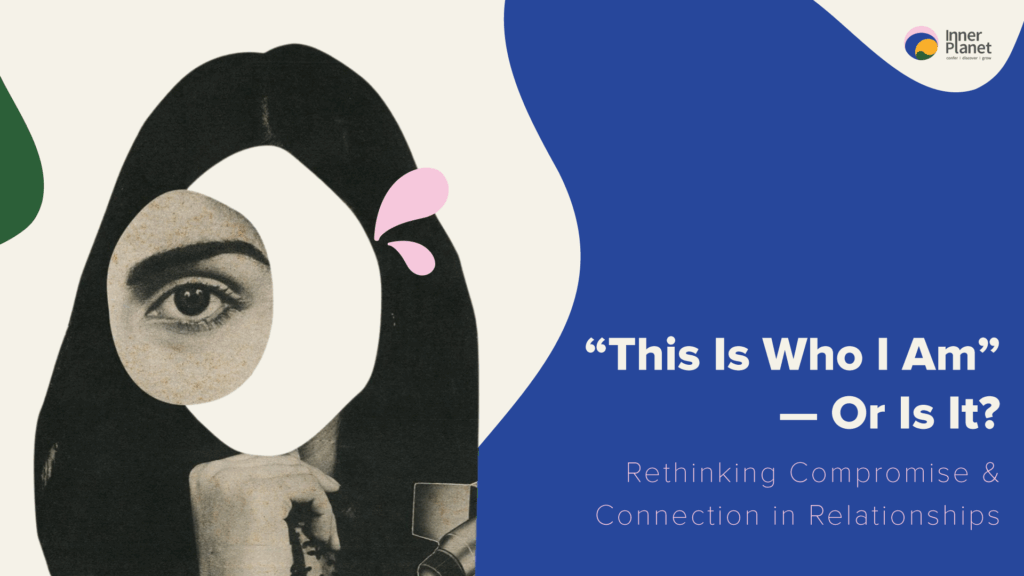
“This is who I am — take it or leave it.”
Now that sounds bold, confident, even freeing.
For a modern world that celebrates self-love and authenticity, the phrase is almost a declaration of strength. But somewhere in the noise of self-acceptance, we may have forgotten something vital — that relationships aren’t built on static perfection, but on continuous care and compromise.
This blog will help you understand where self-acceptance ends and self-protection begins, and how the space between those two can quietly shape the quality of our connections — with friends, family, colleagues, and partners alike.
So let’s explore why we long for unconditional acceptance, how that desire sometimes turns into a wall, and what it really means to love and be loved without losing ourselves in the process.
Why We Long to Be Accepted
Everyone wants to be understood — not just heard, but seen without judgement. For many, the call to “accept me as I am” can come from years of feeling unseen, or from relationships that demanded too much bending, too much proving. A defence born of fatigue.
There’s comfort in the idea that we shouldn’t need to justify our quirks, moods, or fears. But unconditional acceptance, if misunderstood, can become a closed door. When every suggestion or concern feels like an attack, connection starts to thin. Growth doesn’t require us to reject who we are — only to stay open to who we might become.
True acceptance says, “I value who I am, but I’m not afraid of evolution.” That subtle willingness to stretch — even a little — is what can keep love, friendship, and respect alive. And that’s where we start to see the difference between standing firm and standing still.
When Authenticity Becomes Armour
Authenticity is one of the most beautiful things about being human. It’s the relief of taking off the mask, the courage to say, “This is me.” But like all good things, even authenticity can harden into defence if we start using it to avoid reflection.
Sometimes we hide behind the “this is who I am” mindset not because we’re proud of it, but because change feels too uncertain, too tiring. We stop listening. We can start mistaking rigidity for integrity. But if integrity means staying honest, shouldn’t that include honesty about when we’re resisting growth?
Being true to ourselves doesn’t mean refusing to grow. It means being honest enough to admit when something we do, or how we react, is hurting the bond we care about. That honesty — not the stubbornness to stay unchanged — is what makes authenticity sustainable and genuine.
The Subtle Strength of Compromise
Compromise has a bad reputation. It sounds like surrender, like giving up pieces of ourselves to keep the peace. But in truth, compromise is balance. It’s the art of meeting someone halfway without losing your footing.
Think of it as a bridge: strong, flexible, built to carry the weight of two people walking from different directions. Compromise doesn’t ask us to erase our needs; it asks us to listen without fear, to let empathy and patience make space for two truths to coexist.
Compromise in relationships is the invisible thread that keeps connection from fraying. It’s how we say, “You matter, and so do I.”
When Compromise Crosses into Self-Erasure
Of course, balance can tilt. Some of us learn early that keeping harmony means silencing ourselves. We agree too quickly, apologise too often, or absorb blame just to avoid conflict. Over time, that kind of compromise stops being generous — it becomes self-erasure.
Real connection doesn’t demand constant sacrifice. It invites dialogue. It asks, gently, “How can we both stay whole and still stay close?” The healthiest relationships are not the ones without conflict, but the ones where both voices find space to speak and be heard.
Boundaries: The Language of Respect
Boundaries are often misunderstood as distance — as a way of keeping people out. But they are, in truth, an act of care. They define where we end and another begins, not to divide, but to preserve the space where genuine closeness can breathe.
When we communicate our limits clearly and kindly, we’re not pushing others away — we’re inviting them to meet us honestly. Emotional boundaries protect kindness from exploitation. They prevent love from becoming an obligation.
And here’s the beauty: boundaries and compromise aren’t opposites. They’re partners. One helps us stay true to ourselves; the other helps us stay connected to others.
The Modern Mirage of Effortless Compatibility
Modern culture loves simplicity — instant chemistry, perfect alignment, effortless fits. Social media feeds us the illusion that good relationships just work, that the right person or friend will simply “get” us. But compatibility isn’t a gift; it’s a craft.
Even the most harmonious bonds require learning. People grow, circumstances shift, perspectives evolve — and expecting perfect understanding without communication is like expecting a garden to bloom without tending to it.
The truth is, effort in relationships isn’t the enemy of ease. It’s what makes ease possible. Every strong relationship — personal or professional — is a result of ongoing curiosity: the willingness to ask, “Who are you becoming, and how can I meet you there authentically?”
Finding the Balance: Growth over Perfection
Perfection is static; growth is alive. The healthiest connections live in that quiet middle — where acceptance doesn’t mean silent indifference, and boundaries don’t mean cold walls.
Instead of “take me or leave me,” what if we said, “Here’s who I am today, and I’m open to who I can be tomorrow”? That single shift transforms conflict into collaboration. It replaces defensiveness with dialogue.
When we allow space for change — in ourselves and others — we create relationships that aren’t fragile, but resilient. Because growth, unlike perfection, can survive real life.
In the end, every relationship is a living thing. It grows when nurtured, fades when neglected, and transforms when tended with care.
To love or connect deeply isn’t to demand acceptance at all costs. It’s to offer it freely, while leaving the door open for reflection.
The real magic happens when we stop trying to be perfectly understood and start trying to understand better.
That’s where love becomes patient.
That’s where respect deepens.
That’s where “accept me as I am” turns into “walk with me as I grow.”
And if you need help on this journey, we’re always just a call away!