

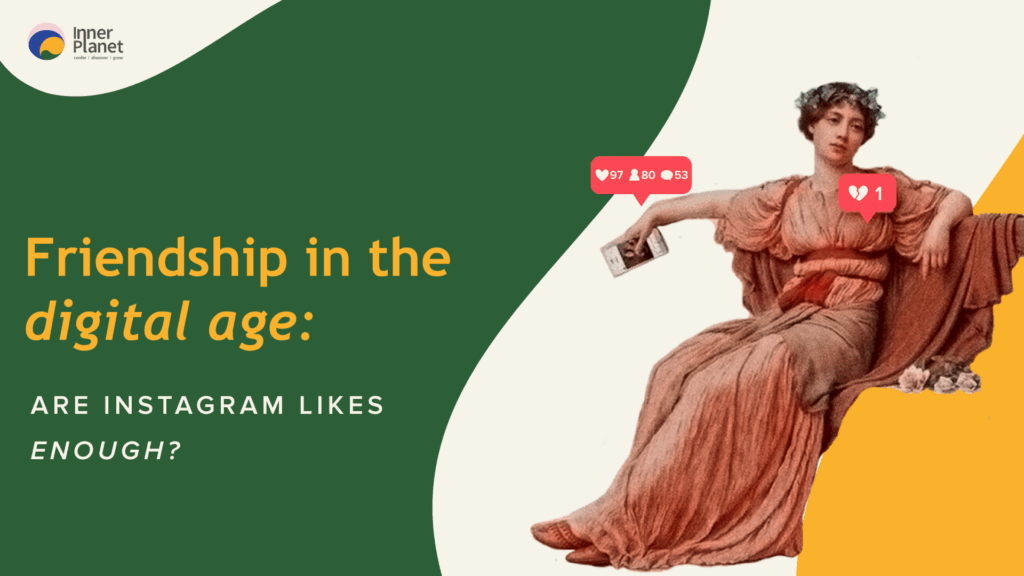
We live in a world where connection looks easier than ever. A heart on a post, a quick reaction to a story, or a comment with a few kind words—it all counts, doesn’t it? And yet, many of us still feel a quiet emptiness when we put our phones down.
In a time of instant communication, the warmth of true friendship can feel increasingly rare. We’re here to ask: Is the way we’re connecting really enough?
More Than a Like: The Need to Feel Seen
Social media often feels like a lifeline. When someone likes our photo or sends a heart emoji, it gives us a little lift—a reminder that we’re noticed. Like a friendly nod from across the room, it says “I see you.” But as comforting as that nod might be, it rarely leads to a deeper connection.
These moments of digital validation, while sweet, are like snacks—they can tide us over, but they don’t nourish. And without nourishment, relationships can quietly starve. Because real friendship isn’t just about being visible to each other—it’s about being understood, remembered, and supported (and however else one defines their friendships).
When those deeper forms of connection are missing, it can leave a quiet ache—one that’s easy to dismiss as “just being busy” until it starts to shape how we feel day to day.
Adult Friendships in a Fast-Moving World
For many of us, maintaining adult friendships isn’t as simple as it once was. As children, friendship came naturally—sit next to someone on a bus, share a silly secret, and you’re practically bonded for life. As adults, it’s a different story. Schedules clash, responsibilities pile up, and “we should catch up soon” becomes the world’s most delayed text message.
With limited time and stretched attention, digital connections can start to replace real conversations. It’s quicker to send a laughing emoji than to ask how someone really is. But making friends in adulthood still requires the same core ingredients it always has: effort, honesty, and time.
The truth is, it’s not that we don’t care—it’s that the world (ourselves included!) rarely pauses long enough for us to show it in full.
Connected But Lonely: A Quiet Reality
It’s entirely possible to have hundreds of followers and still feel deeply alone. In fact, many people do. The digital age connection convinces us that we’re in constant contact, but doesn’t always give us the closeness we truly need.
Think of it like standing in a crowded room where everyone’s talking, but no one’s really listening. That’s what loneliness can feel like. You’re surrounded by noise, yet starved of connection.
And loneliness doesn’t always announce itself with sadness. Sometimes it shows up as irritation, emotional fatigue, or that low hum of “something’s missing.” In such moments, therapy for loneliness can be a place of gentle exploration—a space where we’re not just seen, but heard, valued and guided.
Reimagining Friendship—Online and Offline
This isn’t about turning away from digital life—it’s about using it more intentionally. Online friendships can be real, rich, and rewarding. Some of our most consistent support may come from people we’ve never met in person. But even these relationships grow best with care and consistency.
A like can be a wave. A thoughtful message? That’s a cup of tea and a chat. One is nice, but the other makes you feel human.
What if we saw social media as the front porch of friendship—not the living room? A place to say hello, start conversations, and then invite each other in for something more meaningful.
What We Might Be Missing
Likes are easier and automatic. Listening is more effortful and intentional. But it’s in those quieter, often overlooked moments—staying on an occasional call when it runs a bit longer, remembering a small detail from weeks ago, or reaching out simply because someone crossed your mind—that friendship becomes less about performance and more about lasting connections.
There’s no need to abandon the light touch of social media. But if we want friendships that hold us up, we also need to build them on something sturdier than “likes” alone.
If you’ve been feeling a bit disconnected lately, it might help to ask yourself : What kind of connection do I want—and am I giving it, as much as I’m missing it?
In this always-on world, a little digital affection can go a long way—but it can’t carry the weight of real friendship on its own. Whether online or off, what we all need most is to feel cared for, not just noticed.
Friendship, at its heart, is about showing up. And while a like may open the door, it’s presence, patience, and kindness that helps us walk through it.
If you’re exploring these questions yourself and need help, we’re always just a call away!